
CAMILLE PERRY
CAMILLEPERRY2@GMAIL.COM


CAMILLE PERRY
CAMILLEPERRY2@GMAIL.COM
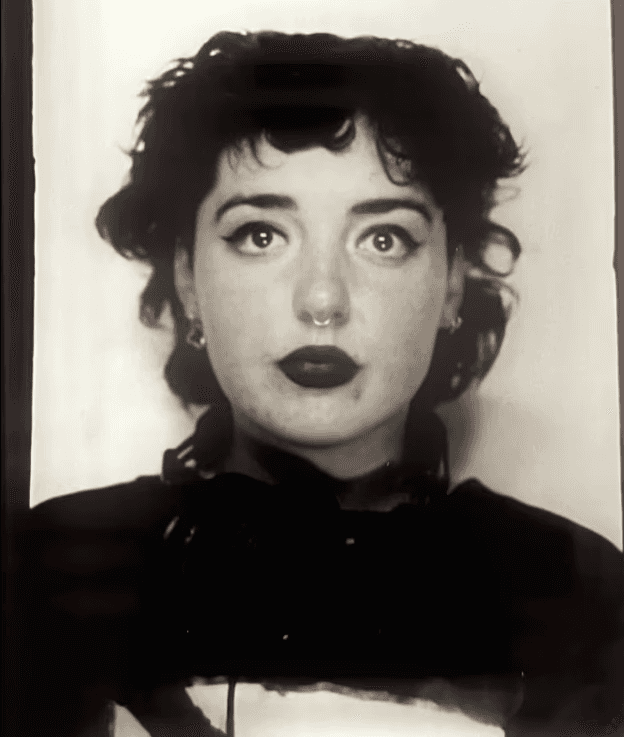
This year I had the privilege of being a finalist in the last National Photographic Portrait Prize.
It felt massive. I had never even considered that my work could be seen in that way. I never really considered myself a portrait photographer. I had never considered the portraits I took of my peers, my community, and my friends as a part of my work because it never felt like work. It felt like little love notes to the people I adore in the language I know how to speak.
Nan Goldin describes taking a photograph as “touching someone - a caress, I think you can give someone access to their own soul”. In a sense, photography is a way of holding my queer friends, their dreams and their fantasies. Even if we can’t have a thousand lifetimes, we want images that live beyond us. We want the illusion of forever.
Sasha Grishin described my portrait of Ava in the Region Canberra as “one of the most seductive works” in the NPPP. I could feel my heart drop when I first read this phrasing. Every part of me wanted to crawl under a rock and hide.
I would like to clarify a few things for my own peace of mind.
Seductive is defined predominantly as “acts that entice someone else into sexual relations”.
When I hear the word seduction, I think of the ‘Siren’, the femme fatale, and the women portrayed in movies as empty vessels for a male protagonist’s hopes and aspirations. We have been conditioned to see women through this lens since the media’s conception.
Women’s bodies have been the subjects of drawings, paintings, photographs, and films. Historically, they have been depicted by men; these women have been reduced through the canon of conquest, power, and “the spectacle”.
This violent way of seeing goes beyond women. First Nations people, POC, Queer and Trans people, disabled people, women and girls have all been viewed through this lens. People existing within the intersections of these identities even more so.
Pleasure, joy, and sexuality have largely been positioned as something that cannot exist if it is not for the male gaze. If it does, it is considered disingenuous. For a woman to be attractive, it must be for a man’s pleasure; otherwise, what the hell would be the point?
If a woman looked hot in the forest and a man wasn’t there to see it, was she really there???
Sapphism in all of its reality is almost inconceivable within this frame of thought.
Sapphic desire has been reduced in media as soft, gentle, and lacking intense sexuality UNLESS it is for a man’s pleasure. UNLESS it is within the context of pornography. This conception of our desire is not only reductive but obscenely untrue. Queer and sapphic sexuality and connection can come in so many shapes and forms.
Being in love with your friends, being in love with your community, expression, or being intimate without any sexual intent should not be unfathomable concepts. They don’t have to be.
One of the (often) unspoken conditions of acceptance into manhood is to experience the world through predominantly two lenses: sex and anger.
We watch young boys have their emotional range whittled away after the age of 11. They can no longer cry or speak to their sadness without the threat of having their rights to ‘manhood’ stripped from them. They are conditioned to believe that this is the key to their belonging.
“Men come to sex hoping that it will provide them with all of the emotional satisfaction that would have come from love. Most men think that sex will provide them with a sense of being alive, connected, that sex will offer closeness, intimacy, pleasure. And more often than not sex simply does not deliver the goods. This fact does not lead men to cease obsessing about sex; it intensifies their lust and their longing.”
― bell hooks, The Will to Change: Men, Masculinity, and Love
While most people have the capacity to feel the full spectrum of emotions in this world, we have to do the work of reestablishing these neural pathways to deprogram gender conditioning. No one can do it for anyone else. You can lead a horse to water, etc. ect.
This is why seductive is the word that comes to Sasha’s mind when he looks at this work, whether he is aware of it or not. He wanted to place himself inside of this image as though it was for him.
This is his context that he must reckon with.
Seeing art critics who have been in the business for so long, worked at a University, had access to education and peers within this world using such sexually loaded words to describe depictions of young women still saddens me to this day. You get paid to use words and to understand their context. Etymology is a part of the gig, dude. You’ve got one word, and that’s the word you choose?? Bro, are u serious…
I can’t help but wonder how a young woman sitting in her car, body completely covered, eyes closed and smoking a cigarette is an act of seduction.
I am going to humour for a moment an ideological framework I can see being posed to me: Jean Baudrillard’s conception of seduction.
Baudrillard understands seduction through the operation of trying to hold equilibrium between two ideas with discernment. Ideological binaries that can never reach stability and instead end up pulling you in the direction that you are attempting to push away from. Baudrillard uses this redefinition of seduction to engage with understandings of gender dynamics.
I like to wrestle with this idea through the lens of Doctor Who (to desexualise the context so I don’t get angry). A classic conundrum the Doctor faces when Rose Tyler tries to save her dad from dying in season one. This particular event is fixed; Rose can attempt to change it, to save him, but inevitably doing this would mean she would no longer be born and could no longer actually save him. Therefore, her attempt to desperately try to run from something inevitably brings about its happening.
What I took from Baudrillard’s De La Séduction and Fatal Strategies is that by attempting to move further away from an ideology, we can end up accidentally bringing about the exact thing we are trying to escape. By trying to avoid an idea, by running in the opposite direction, you can ultimately prove yourself wrong but Baudrillard believes we can sometimes use the rules of gender to our advantage.
I personally think that while Baudrillard has some merit, his approach is antagonistic. While he does not himself believe in gender roles, his attempt to sever seduction’s conceptual ties to patriarchy’s justification kind of feeds them.
It is all fun and games to play conceptual chess when you have no personal experience of the very real and physical pain associated. The act of seduction implies intention, and it implies that the subject is sexually performed for your gaze and has historically been used in the court of law to permit real violence.
I think Baudrillard’s best writing was when he spoke of masculinity. I think speaking from the need to interrogate his own experience made his work stronger. His writing on Masculinity’s formulation around production, power, and the illusion of objective truth is important.
Going back to the term seductive, I would like to pose a few questions;
Would this word have come to mind looking at any of the other works in the show that explore the seductive qualities of masculinity?
Would other images in the show that include nudity receive the same choice of word? Why this one?
Would the images depicting men evoke that same word?
There are images of naked subjects in the National Photographic Portrait Prize. Subjects that are lying in bed.
I feel justified in saying that inevitably this argument and language only comes to the surface when the subject and the creator are young AFAB people.
Does Sasha’s choice of words speak to the Epsteinification of male sexual desire? Does it just pay homage to the sexualisation of girls and young women for hundreds of years for the likes of gross old men? Eroto-critism? I will leave that up to you.
It is frustrating that reinterpretations of words such as seduction are brought into play by people who have never had these words weaponised against them. The idea of seduction has been used to prosecute women for so fckn long. I don’t care if a French philosophy bro tells me I should see it another way. I would like to talk to the women, queer, non-binary and trans people who have felt the painful weaponisation of this word.
We can create (or think of) new words that don’t perpetuate harm while still having philosophical debates. We can discuss desire, socialisation, the illusion of gender and the production of self without triggering people out of the conversation.
My work in general explores desire. It explores queer people having autonomy over their bodies and being able to express sexuality freely. It’s camp, it’s queer and dyke antics. It’s for us.
We often loose ownership of our image to the people compelled to look when they aren’t from our communities. They forget that they are already on thin ice in terms of accessing our stories or our visions.
You have me wishing I could snatch this photo out of your brain so you can’t look at it anymore. This is not because I do not want to share it; it is because how many times can we face sexualised reduction and trivialisation without getting pissed off?
Desire is an aspect of life. We are human beings and sexuality is a part of being in this world. But we have to understand how to engage with these themes without reducing people to sex symbols. When has this reduction of personhood done anyone any good?
Eg. Pam Grier
These women were harmed by objective sexualisation. They were harmed by the media’s entitlement to their bodies and by the violence of words. They were reduced to material that lived in a private album on your computer. These women were activists, writers, painters, artists, gardeners, and actresses. This is not to say they were perfect. There are intersections of class, race, and gender expression within who they are and how they show up in the world, but it is undeniable that these icons were regularly reduced to their sexuality when they are so much more.
To me, this portrait of Ava is not seductive. In no way is it trying to seduce you. It’s trying to show you how we live. How we dream. How we are multifaceted human beings.
We can be Cunty and Complex. These two things are not mutually exclusive.
Side note - Idk, has this guy not watched Legally Blonde?
The use of words like seduction speaks to the harm women, trans, and queer people face every day. Someone seducing you implies they are responsible for YOUR gaze. They are responsible for YOUR actions. You are merely an innocent being taken hostage by the seduction of the other.
Really, it is about how you are looking.
I’m sorry, but language is powerful, and I hate that word. It is a word riddled with misguided portrayals of power dynamics that ignore the eye of the beholder.
It reminds me of the strong women harmed by Sydney Swans players Riley Bice, Nick Blakey, Isaac Heeney, James Jordon and Chad Warner. The media has violently portrayed these women as in some way responsible for the abuse perpetrated against them.
These kinds of men see us as sexual objects of desire. They are surprised by our intellect. They are surprised that we exist outside of them. They are surprised that we hold multitudes.
Women are awe-inspiring, intelligent, complex, strong, compelling, delightful, and challenging.
They are the moment.
They mean so much to me, and I would do anything for them.
Thank u and goodnight :)